
A thoughtful expression of gratitude can make even a simple message feel more personal and meaningful. Whether you are thanking a helpful colleague, responding to customer support, or appreciating a friend’s kindness, choosing the right words matters. The phrase “thank you kindly” conveys appreciation with a polite, courteous tone that can feel slightly traditional compared with everyday expressions.
Similar to “thank you very much,” this expression works in personal conversations and professional correspondence, depending on the context. Alternatives such as “I really appreciate it,” “many thanks,” and “I sincerely appreciate your help” offer different levels of warmth and formality. Understanding their meanings and appropriate usage helps you communicate naturally, avoid repetitive wording, and choose the best expression for every occasion.
What Does “Thank You Kindly” Mean?
“Thank you kindly” is a polite expression used to show gratitude for someone’s help, kindness, service, information, or consideration. It generally means “thank you very much” or “courteously thank you.” It can be used in conversations, emails, customer interactions, personal messages, and other situations where the speaker wants to express appreciation politely.
Origin & History of “Thank You Kindly”
The expression “thank you kindly” combines the familiar expression “thank you” with the adverb “kindly,” which historically has had meanings connected with kindness, goodwill, and gracious behavior.
The word “thank” has very old Germanic roots and has long been associated with expressing gratitude or appreciation. The phrase “thank you” itself developed as a conventional English expression of gratitude. Adding “kindly” gives the expression an additional sense of courtesy or warmth.
Historically, “kindly” was more broadly associated with being kind, gracious, or benevolent than it often is in contemporary English. Over time, its uses narrowed and diversified. In phrases such as “thank you kindly,” it can function as a polite intensifier, adding a slightly distinctive style to an ordinary expression of thanks.
The expression has remained recognizable in modern English, although its frequency and perceived tone vary by speaker and region. In some contexts, especially in parts of the United States, “thank you kindly” can sound friendly, familiar, or even slightly folksy. In other contexts, it may sound old-fashioned or deliberately courteous.
It is important not to treat the phrase as universally formal. “Thank you kindly” is better described as polite and somewhat traditional than strictly formal. A business professional may use it naturally, while another speaker may prefer the simpler “Thank you very much.”
Synonyms & Alternatives by Tone
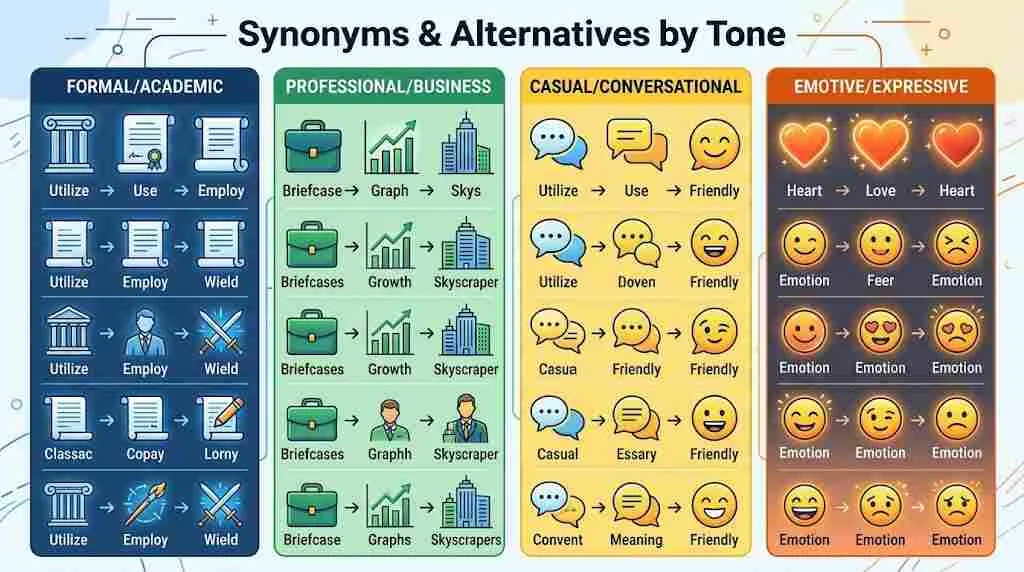
Professional & Neutral Alternatives
- Thank you
- Thank you very much
- Many thanks
- I appreciate your help
- I appreciate it
Polite & Supportive Alternatives
- I sincerely appreciate it
- Thank you for your assistance
- Thank you for your support
- I’m very grateful
- Please accept my thanks
Encouraging & Reassuring Alternatives
- I really appreciate your help
- I’m grateful for your support
- Thanks so much for your help
- I truly appreciate it
- I can’t thank you enough
Casual, Playful & Idiomatic Alternatives
- Thanks a lot
- Thanks so much
- Much appreciated
- Thanks a bunch
- Cheers
When Should You Use “Thank You Kindly”?
Professional settings
“Thank you kindly” can work in professional communication when the workplace has a friendly or traditional communication style. For example:
“Thank you kindly for sending over the revised document.”
However, “Thank you” or “Thank you very much” is usually more universally natural in modern business writing.
Casual conversations
The phrase can sound warm and courteous in everyday conversation, particularly when someone has provided meaningful help.
For example:
“Thank you kindly for helping me carry these boxes.”
It may sound slightly more distinctive than simply saying “Thanks.”
Writing, presentations, and digital communication
In emails and messages, the expression can add warmth without becoming overly emotional. It can be especially suitable when thanking someone for assistance, hospitality, information, or a favor.
In presentations, however, “Thank you” is generally more conventional as a closing.
When it is especially effective
Use “thank you kindly” when you want to sound polite, appreciative, warm, and slightly traditional. It works particularly well when the wording feels natural to your personal or regional style.
When Should You Avoid “Thank You Kindly”?
Overly formal situations
Although polite, “thank you kindly” is not necessarily the most formal expression. In highly formal correspondence, “I sincerely appreciate your assistance” or “Please accept my sincere thanks” may be more appropriate.
Legal, academic, or sensitive contexts
Formal documents often benefit from direct and precise wording. A phrase such as “Thank you for your assistance with this matter” may be preferable when clarity and professional neutrality are important.
Situations where nuance may be lost
In some contexts, “kindly” can sound old-fashioned, overly polished, or even sarcastic depending on delivery.
For example:
“Thank you kindly for ignoring my message.”
Here, the phrase may sound deliberately sarcastic rather than genuinely grateful.
Is “Thank You Kindly” Professional, Polite, or Casual?
“Thank you kindly” is primarily polite, with a slightly traditional or conversational flavor. It is less formal than some official expressions of gratitude but generally more distinctive than a simple “thank you.”
| Feature | Typical Characteristic |
| Formality | Polite; moderately traditional |
| Politeness | High |
| Emotional tone | Warm, appreciative |
| Common meaning | Thank you very much |
| Style | Courteous, sometimes old-fashioned |
| Professional suitability | Appropriate in many friendly workplaces |
The expression’s interpretation also depends on voice and context. Spoken warmly, it can sound sincere. Written in an unusual context, it may sound playful, theatrical, or old-fashioned.
For ESL learners, the safest point to remember is that “kindly” does not make the phrase rude or demanding when it follows “thank you.” Its effect here is to add courtesy.
Pros and Cons of Using “Thank You Kindly”
Advantages
- Clarity: The basic message of gratitude is immediately understandable.
- Efficiency: It expresses appreciation in only three words.
- Warmth: “Kindly” can add a friendly quality.
- Accessibility: Most English speakers understand the expression.
- Distinctiveness: It can sound more personal than a routine “thank you.”
Potential Drawbacks
- Tone mismatch: Some audiences may find it slightly old fashioned.
- Regional variation: It may sound more natural to some speakers than others.
- Possible ambiguity: In certain written contexts, “kindly” can be interpreted differently.
- Overuse: Repeating the same gratitude formula can make writing feel mechanical.
- Sarcasm risk: Context or delivery can change its emotional meaning.
Real-Life Examples of “Thank You Kindly” by Context
Emails
“Thank you kindly for sending the updated invoice. I’ve reviewed it, and everything looks correct.”
This works well in a friendly professional exchange.
Meetings
“Thank you kindly for taking the time to walk us through the proposal.”
This can sound warm and courteous, especially in a relaxed business environment.
Presentations
A speaker might close an informal presentation with:
“Thank you kindly for your time and attention.”
For a formal conference, however, the simpler “Thank you for your attention” may sound more conventional.
Conversations
“Thank you kindly for giving me a lift. I really appreciate it.”
This sounds appreciative and friendly.
Social media
“Thank you kindly to everyone who sent birthday wishes. I really appreciate all the lovely messages.”
The expression can add a personal, warm quality to a public thank-you post.
“Thank You Kindly” vs Similar Expressions (Key Differences)
| Phrase | Meaning Difference | Tone Difference | Best Use Scenario |
| Thank you | Direct expression of gratitude | Neutral and universal | Almost any situation |
| Thank you very much | Stronger or more emphatic thanks | Polite and versatile | Professional and personal communication |
| Many thanks | Concise expression of appreciation | Polished and friendly | Emails and written communication |
| I really appreciate it | Emphasizes personal appreciation | Warm and conversational | Help, favors, and support |
| I sincerely appreciate it | Expresses serious or heartfelt gratitude | Formal and respectful | Professional or important matters |
| Much appreciated | Brief acknowledgment of someone’s help | Casual-professional | Workplace messages and quick replies |
The main difference is degree and styleFor everyday situations, “thank you” is the safest and most versatile choice. Adding “very much” emphasizes gratitude, while “I really appreciate it” conveys a warmer, more personal feeling. With its traditional and courteous tone, “thank you kindly” offers a distinctive way to express appreciation.
Common Mistakes & Misuse of “Thank You Kindly”
Overuse
Repeating “thank you kindly” throughout an email can sound unnatural. Use different expressions when several acknowledgments are necessary.
Incorrect context
The phrase is not always the best choice for highly formal or highly casual communication. A short “Thanks!” may be more natural with a close friend, while a formal letter may require more precise wording.
Contradictory usage
Because “kindly” can occasionally appear in sarcastic or critical statements, context matters.
“Thank you kindly for making this much harder.”
This may communicate frustration rather than genuine gratitude.
Cultural misunderstandings
Some ESL learners may assume that “thank you kindly” is always more formal than “thank you.” It is better understood as polite and somewhat traditional, not automatically formal.
Psychological Reason People Prefer “Thank You Kindly”

Cognitive load reduction
A familiar gratitude expression allows speakers to communicate appreciation quickly without explaining their feelings at length.
Trust and authority signals
Polite language helps maintain positive social relationships. A courteous expression of thanks can reinforce cooperation and respect.
Attention economy
Digital communication often favors short expressions. “Thank you kindly” provides a little more warmth than “Thanks” while remaining concise.
Modern communication habits
People increasingly communicate across workplaces, cultures, and platforms. Short, recognizable gratitude phrases help maintain positive interactions, particularly when messages are brief.
Still, effective communication involves more than speed. The best expression balances brevity with sincerity and context.
US vs UK Usage of “Thank You Kindly”
“Thank you kindly” is understood in both American and British English, but its tone can vary according to region, speaker, and setting.
In American English, the phrase can sound friendly, warm, Southern, folksy, or slightly traditional depending on the speaker. It may also be used simply as an emphatic “thank you.”
British speakers generally understand it without difficulty, although some may prefer “Many thanks,” “Thank you very much,” or “Much appreciated” in modern everyday communication.
There is no major difference in the basic meaning. The more noticeable distinction is style and frequency. Some speakers find “thank you kindly” natural and charming, while others perceive it as somewhat old-fashioned.
“Thank You Kindly” in Digital & Modern Communication
Emails
“Thank you kindly” can work in professional emails when the relationship is friendly:
“Thank you kindly for your quick response.”
For a more neutral corporate style, use:
“Thank you for your quick response.”
Slack / WhatsApp
Digital messaging generally favors shorter forms:
“Thank you kindly! I’ll take care of it.”
This is understandable but may sound slightly more formal than “Thanks!”
Social media
The phrase can work especially well in appreciation posts:
“Thank you kindly for all the thoughtful messages.”
AI-generated summaries
AI-generated professional content often benefits from straightforward gratitude phrases. Depending on the audience, “Thank you,” “Thank you very much,” or “I appreciate your assistance” may be more natural than automatically inserting “thank you kindly.”
AI writing should also consider whether an expression sounds authentic for the speaker rather than simply selecting a synonym mechanically.
Linguistic & Communication Insight
Emotional weight & subtext
Native speakers usually understand “thank you kindly” as genuine gratitude, but the phrase can carry subtle stylistic information. It may suggest warmth, courtesy, tradition, regional identity, or a slightly old-fashioned speaking style.
The emotional effect is therefore somewhat different from:
“Thanks.”
“Thanks” is casual and efficient. “Thank you kindly” gives the same basic message while adding a more deliberate sense of courtesy.
Direct vs indirect phrasing
“Thank you” is highly direct. The speaker openly identifies the purpose of the message: expressing gratitude.
“Thank you kindly” remains direct but adds a courteous modifier. More elaborate alternatives such as “I sincerely appreciate your assistance” communicate gratitude with greater formality and emotional weight.
The choice depends on whether the speaker wants to emphasize simplicity, warmth, sincerity, or professionalism.
Professional communication perspective
In professional communication, “thank you kindly” can be perfectly acceptable, but it should match the organization’s communication style.
For example:
“Thank you kindly for your assistance with the report.”
sounds friendly and courteous.
By contrast:
“Please accept my sincere thanks for your assistance.”
sounds more formal and deliberate.
Neither is inherently better. The audience and situation determine which one feels natural.
Pragmatic reasons for alternatives
Professionals may choose alternatives to control tone.
“Thank you” minimizes unnecessary formality.
“Thank you very much” adds emphasis.
“I really appreciate it” adds personal warmth.
“I sincerely appreciate your assistance” increases formality.
“Much appreciated” keeps the message brief.
Experienced communicators choose among these expressions based on relationship, power balance, medium, and purpose.
Social signaling
Expressions of gratitude do social work beyond saying “thanks.” They acknowledge another person’s contribution and help maintain cooperation.
A detailed thank-you can signal genuine effort:
“I really appreciate you staying late to help me finish this.”
A short version can keep communication efficient:
“Much appreciated.”
The choice can therefore affect how warm, formal, distant, or personal the interaction feels.
Tone & context guidance
Use “thank you kindly” when you want a courteous expression that feels warmer or more distinctive than a basic “thank you.” Avoid forcing it into contexts where it sounds noticeably old-fashioned or overly polished.
When in doubt, “Thank you very much” is one of the safest alternatives because it is clear, polite, and widely accepted.
Meaning, Usage & Examples for Each Alternative
Thank You
Meaning: “Thank you” is the standard English expression used to acknowledge and appreciate someone’s help, kindness, gift, service, or consideration.
Why This Phrase Works: It is direct, universally recognizable, and rarely creates a tone problem.
Real-World Usage Insight: Native speakers use it constantly in professional, academic, social, and everyday situations.
Best Use: Almost any context, from workplace emails to casual conversations.
Avoid When: It is rarely inappropriate, although a more detailed expression may be better when significant effort deserves acknowledgment.
Tone: Neutral, polite, and versatile.
US vs UK Usage: Extremely common in both American and British English.
Example (Email / Message / Meeting): “Thank you for sending the revised report. I’ve reviewed the changes, and everything looks good.”
Thank You Very Much
Meaning: “Thank you very much” expresses stronger or more emphatic gratitude than a simple “thank you.”
Why This Phrase Works: It remains natural while clearly communicating appreciation.
Real-World Usage Insight: It is particularly useful when someone has provided meaningful assistance or gone beyond what was expected.
Best Use: Professional emails, personal messages, customer service, and formal conversations.
Avoid When: Repeated use in every sentence can sound formulaic.
Tone: Polite, warm, and moderately formal.
US vs UK Usage: Very common in both.
Example (Email / Message / Meeting): “Thank you very much for taking the time to explain the new process. That cleared up several questions for me.”
Many Thanks
Meaning: “Many thanks” is a concise way to express appreciation, particularly in writing.
Why This Phrase Works: It sounds polished without being excessively formal.
Real-World Usage Insight: It is especially common in emails and written correspondence.
Best Use: Professional emails, messages, requests, and follow-ups.
Avoid When: A highly emotional or personal thank-you may need warmer wording.
Tone: Polite, concise, friendly-professional.
US vs UK Usage: Common in both, with especially natural use in written British English.
Example (Email / Message / Meeting): “Many thanks for forwarding the meeting notes. I’ll review them before tomorrow’s call.”
I Appreciate Your Help
Meaning: “I appreciate your help” directly recognizes the value of someone’s assistance.
Why This Phrase Works: It sounds personal while remaining professional and clear.
Real-World Usage Insight: It is particularly effective after someone solves a problem or provides practical assistance.
Best Use: Workplace communication, customer service, academic settings, and personal requests.
Avoid When: The situation requires only a very brief acknowledgment.
Tone: Warm, professional, sincere.
US vs UK Usage: Natural in both varieties of English.
Example (Email / Message / Meeting): “I appreciate your help with the spreadsheet. I was struggling to reconcile those figures.”
Conclusion
The expression “thank you kindly” conveys gratitude with a warm, courteous, and slightly traditional tone. Although it remains understandable in modern English, its suitability depends on the audience and situation. Simple alternatives such as “thank you very much” and “many thanks” can sound more natural in everyday and professional communication.
Choosing the right expression depends on your relationship with the recipient, the purpose of your message, and the level of formality required. Whether you are writing an email, thanking a colleague, or expressing personal appreciation, understanding these alternatives helps you communicate naturally, respectfully, and confidently.
FAQs
What does “thank you kindly” mean?
“Thank you kindly” is a polite expression used to show gratitude and appreciation. It generally means “thank you very much” or simply “thank you.” The phrase can be used when someone provides help, information, service, support, or kindness. It usually sounds courteous and warm, although it can have a slightly traditional quality.
Is “thank you kindly” professional?
Yes, “thank you kindly” can be professional, particularly in friendly workplace emails, customer communication, or courteous correspondence. However, it is somewhat more traditional than “thank you.” For highly formal situations, expressions such as “I sincerely appreciate your assistance” or “Thank you for your assistance” may sound more appropriate.
Is “thank you kindly” formal or casual?
“Thank you kindly” is best described as polite and moderately traditional rather than strictly formal or casual. It can work in both professional and everyday situations. Its perceived formality depends on context and regional preference. Some speakers consider it warm and friendly, while others may find it slightly old-fashioned.
What is another way to say “thank you kindly”?
Useful alternatives include “thank you very much,” “many thanks,” “I appreciate it,” “I really appreciate your help,” “thank you for your assistance,” and “I’m very grateful.” Choose based on context. “Thank you very much” is versatile, while “I appreciate your help” sounds natural and professional.
Is “thank you kindly” old-fashioned?
“Thank you kindly” can sound slightly old-fashioned to some English speakers, but it is still understood and used today. Its traditional quality can make it sound warm, courteous, or distinctive. Whether it feels modern depends on the speaker, region, relationship, and communication setting.
Can I use “thank you kindly” in an email?
Yes. “Thank you kindly” is appropriate in many emails, especially when you want to sound courteous and appreciative. For example, “Thank you kindly for sending the revised document” is natural. In highly formal business communication, “Thank you for your assistance” may provide a more neutral and conventional professional tone.
Is “thank you kindly” common in American English?
Yes, American English speakers understand and use “thank you kindly.” Depending on the speaker and region, it can sound friendly, traditional, folksy, or warm. It is less neutral than a simple “thank you,” so “thank you very much” or “I appreciate it” may be preferred in some modern professional settings.
Is “thank you kindly” common in British English?
Yes, British speakers understand the expression, although it may sound somewhat traditional in some contexts. “Many thanks,” “much appreciated,” and “thank you very much” are also common choices. The basic meaning remains the same: the speaker is expressing gratitude politely.
What is the difference between “thank you” and “thank you kindly”?
“Thank you” is neutral, direct, and suitable for almost any situation. “Thank you kindly” communicates the same basic gratitude but adds a more courteous and slightly traditional tone. The difference is mainly stylistic rather than semantic. If you need the safest option for a broad audience, “thank you” is usually preferable.
What is the best professional alternative to “thank you kindly”?
The best professional alternative depends on the situation. “Thank you very much” is versatile, while “I appreciate your help” sounds warm and natural. For formal correspondence, “Thank you for your assistance” is particularly effective. These alternatives communicate gratitude clearly without sounding unnecessarily traditional or regional.