Sometimes, a simple phrase can express more than its words suggest. In everyday English, “bully for you” is used to mean “good for you” or “well done,” but depending on the situation, it can sound either sincere or sarcastic.
Choosing the right alternative helps you express your feelings more clearly. Whether you’re talking with friends or communicating at work, phrases like “Congratulations,” “Good for you,” and “Well done” can make your message sound more natural and appropriate.
What Does “Bully For You” Mean?
“Bully for you” is an informal English expression meaning “good for you,” “well done,” or “that is pleasing or impressive.” It can express genuine approval, congratulations, or encouragement, but in modern usage it is also frequently used sarcastically to suggest that the speaker is unimpressed. It commonly appears in conversations and informal writing.
Origin & History of “Bully for You”
The history of “bully for you” is closely connected to the older positive meanings of the word bully. Although bully now commonly refers to someone who intimidates or mistreats others, the word originally had much more positive associations.
Historical evidence traces bully to a term of endearment meaning something like “sweetheart” or “fine fellow.” The word later developed several meanings, including “jolly,” “admirable,” and “excellent.” That positive sense survived in expressions such as “bully for you.”
The expression became particularly associated with American English during the nineteenth century. Historical sources record “bully for you” in the 1860s, with examples from the period showing it as an expression of approval or praise.
Over time, however, the expression developed a second important use: sarcasm. A speaker could say “bully for you” while deliberately sounding unimpressed. Modern dictionaries and language references recognize both the approving and sarcastic possibilities.
This evolution explains why the phrase can be confusing today. The words suggest enthusiastic praise, but context and delivery can completely reverse the intended meaning.
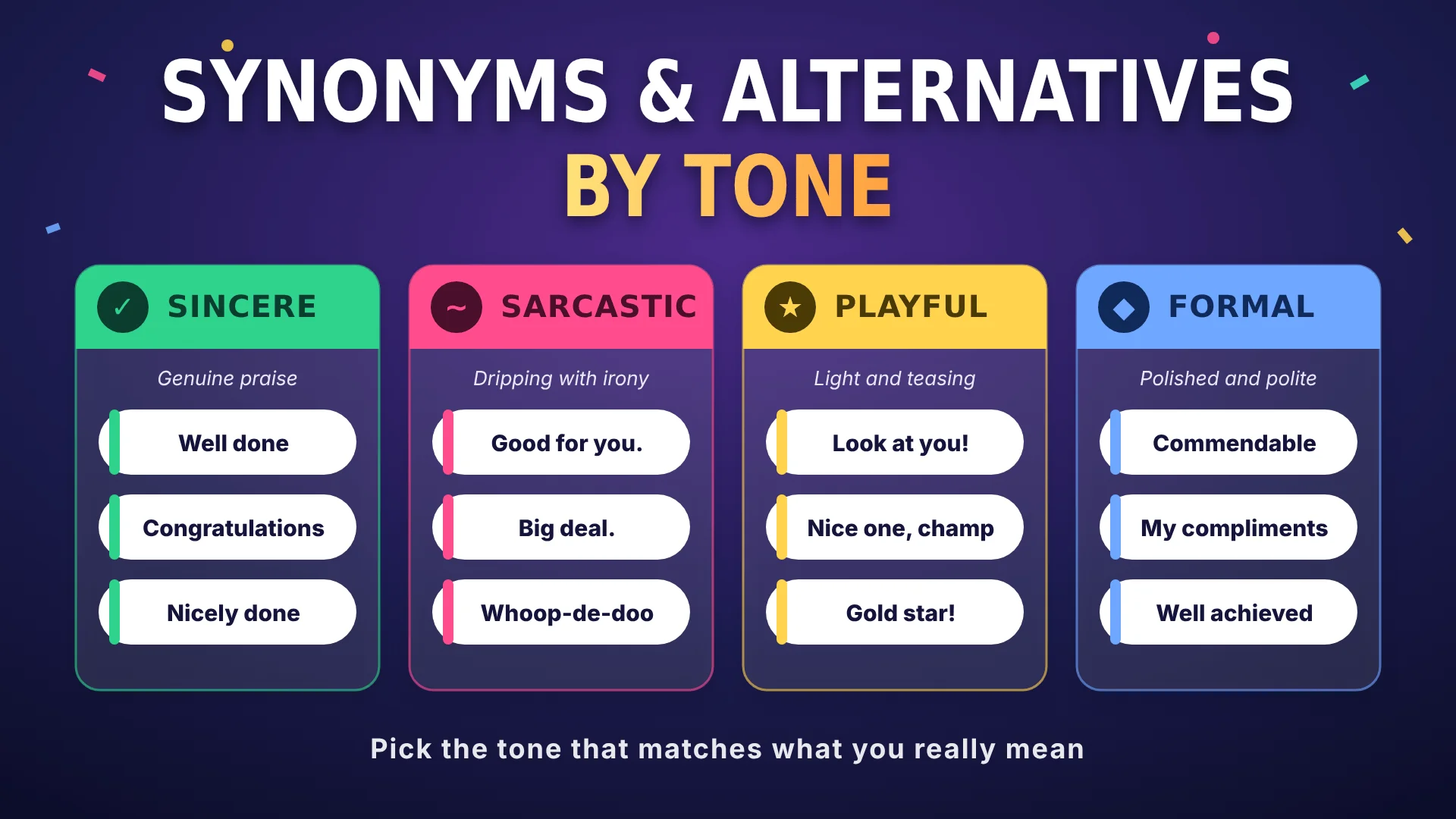
Synonyms & Alternatives by Tone
Professional & Clear Alternatives
- Well done
- Congratulations
- Excellent work
- Good work
- That’s a great achievement
- Nicely done
Warm & Supportive Alternatives
- Good for you
- I’m happy for you
- That’s wonderful
- I’m glad to hear that
- You should be proud
Encouraging Alternatives
- Keep it up
- You’re doing great
- You’ve done a great job
- That’s something to be proud of
Casual & Enthusiastic Alternatives
- Way to go
- Good on you
- More power to you
- Nice one
- Kudos
- Bravo
- Props to you
- You nailed it
✨ Find Your Perfect Phrase
Choose your situation and discover a better way to say “Bully for You.”
When to Use and Avoid “Bully for You”
“Bully for you” is best suited to informal situations where the speaker’s tone and intention are easy to understand. Although it can express genuine approval, its sarcastic undertone makes it important to consider the audience and context before using it.
| Situation | Recommendation | Why It Works or Doesn’t |
| Friendly conversations | Use | Expresses genuine approval or playful encouragement among friends. |
| Casual conversations | Use | Works naturally when both speakers understand each other’s humor. |
| Informal text messages | Use | Adds a playful or humorous touch to relaxed conversations. |
| Social media posts | Use | Can create an ironic, funny, or self-aware tone. |
| Workplace conversations | Use cautiously | May sound friendly among close colleagues but sarcastic in other situations. |
| Professional emails | Avoid | “Well done” or “Congratulations” communicates appreciation more clearly. |
| Formal presentations | Avoid | The expression may sound too casual or ambiguous. |
| Academic and legal writing | Avoid | These contexts require precise and neutral language. |
| Sensitive conversations | Avoid | It may make someone feel that their experience or achievement is being dismissed. |
| Unfamiliar audiences | Avoid | Listeners may misunderstand the intended humor or sarcasm. |
The key is to consider your audience and intention. Use “bully for you” when a relaxed, humorous tone is appropriate, but choose a clearer alternative whenever sincerity, professionalism, or sensitivity matters.
Is “Bully for You” Professional, Polite, or Casual?
“Bully for you” is primarily an informal expression that can sound friendly, humorous, or sarcastic depending on the speaker’s tone. It is generally not recommended for formal or professional communication because its intended meaning may be unclear.
Among friends and close colleagues, it can work as playful encouragement when the relationship supports that style. However, expressions such as “Well done,” “Congratulations,” and “Excellent work” are more reliable choices when you want to communicate sincere appreciation.
Overall, “bully for you” is best suited to relaxed conversations rather than situations that require clear, professional, or sensitive communication.
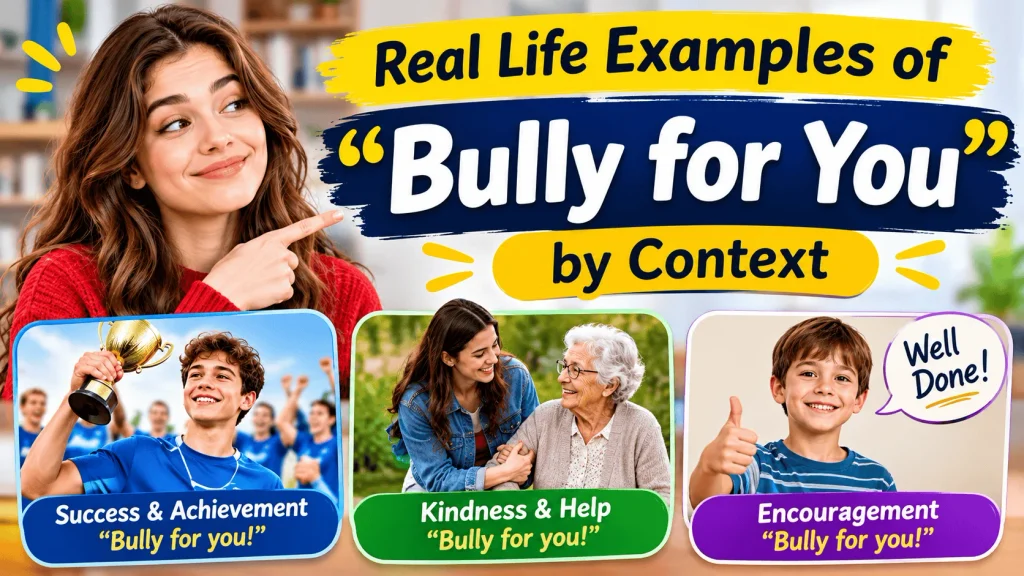
Real Life Examples of “Bully for You” by Context
Friendly Conversations
“I finally passed my driving test!”
“Bully for you! You must be relieved.”
This response expresses genuine happiness and approval.
Workplace Conversations
“You managed to finish the report before the deadline? Bully for you! I’m still working on mine.”
Among close colleagues, this can sound playful and slightly teasing.
Meetings
“So your team has already completed the testing phase? Bully for you. We’re hoping to finish ours by Friday.”
Depending on the speaker’s delivery, it may sound supportive or sarcastic.
Social Media
“Finished my final assignment three days early. Bully for me!”
Here, the expression creates a humorous and self-aware tone.
Informal Messages
“Got the internship I applied for!”
“Bully for you! I knew you’d get it.”
This example shows how the phrase can communicate friendly approval.
Common Mistakes & Misuse of “Bully for You”
Using “bully for you” correctly requires an understanding of its informal nature and possible sarcastic meaning. Although the expression is relatively simple, a few common mistakes can affect how others interpret it.
Using It in Formal Situations
One common mistake is including the phrase in formal emails or business communication. Its casual and sometimes sarcastic tone may not suit the situation.
Assuming It Is Always Positive
The expression does not always communicate genuine happiness. Depending on delivery, it may suggest indifference or mild criticism.
Ignoring the Listener’s Feelings
Responding with this phrase when someone shares sensitive personal news may appear dismissive. A more empathetic expression is usually preferable.
Confusing Its Historical and Modern Meanings
The positive meaning of the older word bully can confuse English learners who primarily associate it with intimidation. Understanding its history makes the expression easier to interpret.
Using It Without Considering Context
A phrase that sounds humorous among close friends may appear rude to an unfamiliar audience. Always consider the relationship and situation before using it.
US vs UK Usage of “Bully for You”
“Bully for you” is understood in both American and British English, although it may sound old-fashioned or humorous in modern conversations.
American English: The expression has a notable historical connection with nineteenth-century American usage. Today, it may appear in ironic conversations or deliberately old-fashioned speech.
British English: British speakers also understand the phrase, but its use is relatively context-dependent. It can sound playful, dated, or sarcastic.
In both varieties, the speaker’s tone and relationship with the listener help determine whether the expression is sincere or ironic.
Using “Bully for You” in Modern Digital Communication
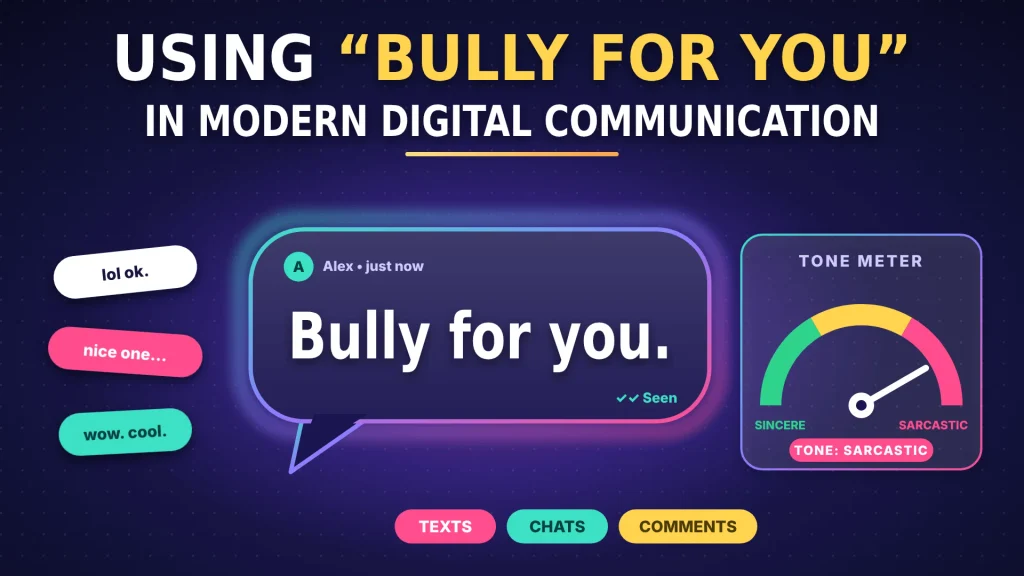
In digital communication, “bully for you” can add humor or irony to text messages, emails, and social media posts. However, written conversations do not always make sarcasm easy to recognize.
Among friends, the expression may sound playful, especially when both people understand each other’s humor. In professional emails and online discussions, however, clearer alternatives such as “Well done” or “Congratulations” can prevent misunderstandings.
Consider the audience and relationship before using the phrase in a written message.
🏆 Are You a Phrase Expert?
Test your knowledge of “Bully for You” and its alternatives.
Understanding the Tone and Social Meaning
The meaning of “bully for you” depends on more than its dictionary definition. The speaker’s attitude, delivery, and relationship with the listener all influence how the expression is understood.
When spoken warmly, it can communicate genuine approval. However, a flat or dismissive delivery may suggest sarcasm or indifference.
Expressions such as “Congratulations” and “Well done” communicate appreciation more directly, while “bully for you” leaves more room for interpretation. Understanding this difference helps speakers choose words that match their intended message and audience.
Meaning, Usage & Examples for Each Alternative
Good for You
Meaning: “Good for you” means that something positive has happened to someone or that their decision or achievement deserves approval. Why This Phrase Works: It is short, familiar, and flexible. Real-World Usage Insight: It can be genuinely supportive or sarcastic, so delivery matters. Best Use: Casual conversations and friendly messages. Avoid When: A highly formal tone is required. Tone: Casual, supportive, sometimes ironic. US vs UK Usage: Common in both varieties. Example (Message): “You finally finished the course? Good for you! I know you’ve been working on it for months.”
Well Done
Meaning: “Well done” directly praises a successful action, performance, or achievement. Why This Phrase Works: Its positive meaning is usually unmistakable. Real-World Usage Insight: It works particularly well when someone has completed a task successfully. Best Use: Work, education, meetings, and everyday conversation. Avoid When: The situation does not involve an achievement. Tone: Positive and professional-friendly. US vs UK Usage: Very common in both, with especially broad everyday use in British English. Example (Email): “Well done on completing the client presentation ahead of schedule. The final version looks strong.”
Congratulations
Meaning: “Congratulations” expresses approval and happiness about someone’s achievement, milestone, or success. Why This Phrase Works: It clearly communicates positive recognition. Real-World Usage Insight: It is one of the safest alternatives when you want to avoid ambiguity. Best Use: Graduations, promotions, awards, completed projects, and major milestones. Avoid When: The event is not actually an achievement or occasion for celebration. Tone: Polite, positive, professional. US vs UK Usage: Standard in both varieties. Example (Meeting): “Congratulations on securing the new client. That was a strong result for the whole team.”
Excellent Work
Meaning: “Excellent work” gives strong praise for the quality of someone’s work. Why This Phrase Works: It identifies the work itself as the reason for approval. Real-World Usage Insight: It is particularly useful when feedback needs to sound encouraging but professional. Best Use: Workplace and academic settings. Avoid When: The work has not yet been reviewed properly. Tone: Professional and strongly positive. US vs UK Usage: Natural in both varieties. Example (Email): “Excellent work on the revised report. The recommendations are much clearer now.”
Good Work
Meaning: “Good work” recognizes that someone has completed a task effectively. Why This Phrase Works: It is concise and easy to understand. Real-World Usage Insight: It can function as quick spoken feedback or written encouragement. Best Use: Teams, classrooms, projects, and everyday conversations. Avoid When: A more formal or detailed commendation is expected. Tone: Friendly-professional. US vs UK Usage: Common in both. Example (Meeting): “Good work, everyone. We managed to resolve the main issues before the deadline.”
That’s a Great Achievement
Meaning: This phrase explicitly identifies someone’s accomplishment as significant. Why This Phrase Works: It is more specific than a simple “good for you.” Real-World Usage Insight: It sounds sincere when the achievement genuinely required effort or skill. Best Use: Professional recognition and supportive conversation. Avoid When: The accomplishment is very minor and exaggerated praise would sound unnatural. Tone: Warm and professional. US vs UK Usage: Natural in both. Example (Email): “Completing the certification while working full-time is a great achievement. Congratulations.”
Nicely Done
Meaning: “Nicely done” means that someone handled a task or situation successfully. Why This Phrase Works: It offers praise without sounding excessively formal. Real-World Usage Insight: It is particularly natural after seeing a completed piece of work. Best Use: Informal workplaces, conversations, sports, and creative projects. Avoid When: A highly formal written acknowledgment is needed. Tone: Friendly and positive. US vs UK Usage: Used in both. Example (Message): “Nicely done on the presentation. The explanation of the results was much easier to follow this time.”
I’m Happy for You
Meaning: “I’m happy for you” communicates personal happiness about another person’s success or positive situation. Why This Phrase Works: It emphasizes emotional support rather than simply judging the achievement. Real-World Usage Insight: It is especially natural when a friend or family member shares good news. Best Use: Personal conversations and supportive messages. Avoid When: A strictly impersonal professional response is required. Tone: Warm and personal. US vs UK Usage: Common in both. Example (Message): “You got the internship? I’m really happy for you. You’ve been working toward this for a long time.”
That’s Wonderful
Meaning: “That’s wonderful” expresses strong positive approval or pleasure about news or an outcome. Why This Phrase Works: It sounds warmer than a simple “good.” Real-World Usage Insight: It can acknowledge both achievements and personal good news. Best Use: Conversations, messages, and friendly professional communication. Avoid When: A restrained or highly formal response is expected. Tone: Warm and enthusiastic. US vs UK Usage: Common in both. Example (Email): “That’s wonderful news about the scholarship. Congratulations to you and your family.”
I’m Glad to Hear That
Meaning: “I’m glad to hear that” communicates relief, pleasure, or approval after receiving positive information. Why This Phrase Works: It responds naturally to news rather than focusing only on achievement. Real-World Usage Insight: It is particularly useful when someone has been waiting for a positive outcome. Best Use: Emails, conversations, and supportive messages. Avoid When: Strong congratulations are more appropriate. Tone: Polite and supportive. US vs UK Usage: Natural in both. Example (Email): “I’m glad to hear that the issue has been resolved. Please let me know if anything else comes up.”
Way to Go
Meaning: “Way to go” is an informal expression of enthusiastic praise for success. Why This Phrase Works: It sounds energetic and immediately positive. Real-World Usage Insight: It is especially natural after a successful performance or accomplishment. Best Use: Friends, teams, classrooms, and informal workplaces. Avoid When: Formal business writing requires a restrained tone. Tone: Casual and enthusiastic. US vs UK Usage: Very common in American English and understood in British English. Example (Social Media): “Way to go! You finished the race and beat your previous time.”
Good on You
Meaning: “Good on you” is an informal expression praising someone’s action, decision, or achievement. Why This Phrase Works: It communicates friendly approval without sounding overly formal. Real-World Usage Insight: It is strongly associated with conversational English. Best Use: Casual conversations and friendly messages. Avoid When: Writing to an unfamiliar professional audience. Tone: Informal and encouraging. US vs UK Usage: Especially associated with British, Irish, Australian, and other varieties of English; it is understood elsewhere. Example (Message): “You volunteered to organize the fundraiser? Good on you. They definitely needed someone to take charge.”
More Power to You
Meaning: “More power to you” expresses approval of someone’s choice, determination, or willingness to follow their own path. Why This Phrase Works: It supports personal choice without necessarily saying the speaker would make the same choice. Real-World Usage Insight: It often carries a sense of respectful independence. Best Use: Casual discussions and personal decisions. Avoid When: You need to give precise professional feedback. Tone: Informal and supportive. US vs UK Usage: Understood in both, with usage varying by speaker and region. Example (Conversation): “You’re taking a year to learn a new skill? More power to you. I hope it works out.”
Kudos
Meaning: “Kudos” means praise, credit, or recognition for an achievement. Why This Phrase Works: It is concise while still sounding more deliberate than “good job.” Real-World Usage Insight: It works particularly well in workplace and online communication. Best Use: Professional messages, team discussions, and informal recognition. Avoid When: Writing extremely formal documents where plain wording is preferred. Tone: Informal-professional. US vs UK Usage: Widely understood in both. Example (Slack): “Kudos to everyone who stayed late to get the launch ready. The final result looks great.”
Nice One
Meaning: “Nice one” is an informal way to praise a successful action, clever idea, or positive result. Why This Phrase Works: It is quick, natural, and conversational. Real-World Usage Insight: It is particularly common in relaxed spoken English and messaging. Best Use: Friends, peers, informal teams, and chats. Avoid When: Addressing senior executives or writing formal correspondence. Tone: Casual and friendly. US vs UK Usage: Particularly natural in British English; understood in American English but somewhat less characteristic. Example (Message): “Nice one! You spotted the mistake before we sent the report to the client.”
You Nailed It
Meaning: “You nailed it” means someone performed a task extremely well or achieved exactly the desired result. Why This Phrase Works: It conveys strong, confident praise. Real-World Usage Insight: It is especially natural when responding to a successful performance or accurate solution. Best Use: Casual conversations, creative work, presentations, and team chats. Avoid When: Formal academic or legal communication requires a neutral register. Tone: Casual and enthusiastic. US vs UK Usage: Common and understood in both, with especially strong familiarity in American informal English. Example (Meeting): “You nailed it with that opening slide. It explained the problem clearly without overloading the audience.”
🔍 Decode the Tone!
Can you recognize the real meaning behind these expressions?
Keep It Up
Meaning: “Keep it up” encourages someone to continue doing something well or maintain their progress.
Why This Phrase Works: It recognizes someone’s effort while motivating them to continue.
Real-World Usage Insight: It is especially useful when someone is making consistent progress rather than celebrating a single achievement.
Best Use: Workplace feedback, education, personal goals, and friendly conversations.
Avoid When: Someone has already completed a major milestone and deserves direct congratulations.
Tone: Encouraging, positive, and supportive.
US vs UK Usage: Common in both American and British English.
Example (Message): “You’ve improved your writing so much. Keep it up!”
You Should Be Proud
Meaning: “You should be proud” encourages someone to recognize the value of their own achievement or effort.
Why This Phrase Works: It offers personal encouragement and acknowledges the hard work behind a result.
Real-World Usage Insight: It sounds especially meaningful when someone has overcome a challenge or achieved a personal goal.
Best Use: Supportive conversations, personal messages, and meaningful accomplishments.
Avoid When: A brief or strictly professional response is more appropriate.
Tone: Warm, sincere, and encouraging.
US vs UK Usage: Natural in both varieties.
Example (Conversation): “You completed the course while working full-time. You should be proud!”
You’re Doing Great
Meaning: “You’re doing great” expresses approval of someone’s current performance, progress, or effort.
Why This Phrase Works: It provides encouragement without requiring the person to have completed a specific achievement.
Real-World Usage Insight: It is particularly useful for recognizing ongoing improvement.
Best Use: Coaching, teamwork, education, and supportive conversations.
Avoid When: A formal evaluation requires specific and detailed feedback.
Tone: Friendly, positive, and motivating.
US vs UK Usage: Common and easily understood in both.
Example (Message): “Your presentation skills have improved a lot. You’re doing great!”
You’ve Done a Great Job
Meaning: “You’ve done a great job” directly recognizes the quality of someone’s completed work or performance.
Why This Phrase Works: It communicates sincere appreciation while identifying the person’s effort and results.
Real-World Usage Insight: It is a clear alternative when you want to praise someone’s completed task without sounding overly casual.
Best Use: Workplace communication, academic settings, team projects, and everyday conversations.
Avoid When: You have not reviewed the person’s work or performance.
Tone: Positive, appreciative, and professional-friendly.
US vs UK Usage: Natural in both American and British English.
Example (Email): “You’ve done a great job preparing the final report. The details are clear and well organized.”
Comparison Table of 10 Best Alternatives
The strongest alternatives depend on whether you want clear praise, professional recognition, emotional support, or casual enthusiasm. The table below highlights ten especially useful choices and the situations where each is most appropriate.
| Phrase | Meaning | Best Use | Worst Use | Tone | US vs UK Usage |
| Good for you | Shows approval of someone’s success or choice. | Casual conversation | Sensitive situations where sarcasm may be suspected | Casual | Common in both |
| Well done | Direct praise for successful work or action. | Work, school, everyday praise | When no achievement occurred | Positive, clear | Very common in both |
| Congratulations | Recognizes an achievement or milestone. | Professional and personal occasions | Minor routine tasks | Polite, positive | Standard in both |
| Excellent work | Strong praise for quality work. | Workplace and academic settings | Unreviewed or mediocre work | Professional | Common in both |
| Good work | Recognizes effective performance. | Team feedback | Highly formal commendations | Friendly-professional | Common in both |
| Nicely done | Praises successful handling of something. | Informal work and conversation | Formal correspondence | Friendly | Common in both |
| I’m happy for you | Expresses personal happiness about someone’s good news. | Friends and supportive conversations | Strictly formal reports | Warm | Common in both |
| Way to go | Enthusiastic praise for success. | Informal communication | Formal business letters | Energetic | Especially common in US English |
| Kudos | Gives credit or recognition. | Workplace and online communication | Very formal legal documents | Informal-professional | Common in both |
| You nailed it | Says someone performed exceptionally well. | Casual praise and team chats | Formal academic or legal writing | Casual, enthusiastic | Common in both |
Conclusion
Understanding “bully for you” means recognizing that an expression can communicate more than its literal definition. Although it traditionally expresses approval or encouragement, modern speakers may also use it sarcastically or humorously. Its intended meaning depends on the situation, the speaker’s tone, and the relationship between the people communicating.
Choosing the right alternative makes your English sound more natural and appropriate. Expressions such as “Well done,” “Congratulations,” and “Excellent work” are suitable for professional recognition, while “Good for you,” “Way to go,” and “You nailed it” work well in casual conversations. Ultimately, selecting words that match your audience and intended message helps you communicate appreciation clearly and avoid unnecessary misunderstandings.
FAQs
What does “bully for you” mean?
“Bully for you” generally means “good for you,” “well done,” or “that’s great for you.” It can express genuine approval, but modern speakers also use it sarcastically. The intended meaning depends on context, tone, and the relationship between speakers.
Is “bully for you” a compliment?
Yes, it can be a compliment when used sincerely. The expression traditionally communicates approval or praise. However, it can also sound ironic or dismissive when delivered without genuine enthusiasm. If you want to express clear appreciation, “Congratulations” or “Well done” is a safer choice.
Is “bully for you” sarcastic?
It can be sarcastic, especially when someone uses it to acknowledge another person’s success without showing genuine interest. However, it is not always negative. A cheerful voice and supportive situation can make it a sincere expression of approval.
Is “bully for you” professional?
Generally, it is considered informal and is not the best choice for professional communication. Its possible sarcastic meaning can create confusion in workplace emails, presentations, and meetings. Expressions such as “Excellent work,” “Congratulations,” and “Well done” are usually more appropriate.
What are the best synonyms for “bully for you”?
Some useful alternatives include “Good for you,” “Well done,” “Congratulations,” “Excellent work,” “Way to go,” “Kudos,” “Good on you,” and “You nailed it.” The best choice depends on whether you want to sound professional, supportive, enthusiastic, or casual.
Is “good for you” the same as “bully for you”?
Both expressions can communicate approval or recognition, but they differ in style and frequency. “Good for you” is more common in everyday English, whereas “bully for you” often sounds old-fashioned or deliberately humorous. Both expressions can also be sarcastic depending on delivery.
Why does “bully for you” sound old-fashioned?
The expression comes from an older positive meaning of the word bully, which was once associated with friendliness, admiration, and excellence. Although the phrase remains understandable, its unusual wording makes it sound dated or playful to some modern speakers.
Can “bully for you” be used in an email?
Yes, it can appear in informal emails between people who share a relaxed communication style. However, it is generally better to use “Well done,” “Congratulations,” or “Great work” in professional correspondence to avoid an unintended sarcastic impression.