
Receiving a call or text meant for someone else can be confusing, but the right words can correct the mistake without sounding rude. The expression “you have the wrong number” is a common way to explain the situation, while alternatives such as “Sorry, wrong number” and “I believe you’ve reached the wrong person” offer different levels of politeness and formality.
This guide explores 20 alternatives to “you have the wrong number,” explaining their meanings, tones, and appropriate uses. Whether you’re responding to an unfamiliar text, handling a professional call, or correcting a mistaken contact, you’ll find practical examples to help you choose a clear, polite, and natural response for any situation.
What Does “You Have the Wrong Number” Mean?
“You have the wrong number” means that someone has called or messaged a telephone number that does not connect them with the person they intended to reach. This can happen when someone enters an incorrect digit, uses outdated contact information, or mistakes one person’s number for another’s.
The expression is commonly used during phone calls, text messages, and messaging conversations. It provides a quick, clear way to correct the mistake without requiring a lengthy explanation.
Quick Tip: Want to sound polite without overexplaining? Try saying, “I’m sorry, I think you have the wrong number.” For a quick text, “Sorry, wrong number!” sounds natural. Choose the wording that best matches your situation.
Synonyms & Alternatives by Tone
The best alternative depends on whom you’re speaking to, how formal the situation is, and whether you want to sound direct, polite, or casual. The following expressions offer different ways to correct a mistaken call or message.
Professional and Neutral Alternatives
These expressions work well when you want to communicate clearly without sounding overly casual.
- You’ve reached the wrong number. A neutral way to explain that someone has contacted an unintended number.
- This isn’t the number you were trying to reach. A clear, non-accusatory way to correct the mistake.
- I believe you have the wrong number. A professional-sounding option that softens the correction.
- You may have dialed the wrong number. A considerate way to suggest a possible dialing error.
- I think you have the incorrect number. A straightforward alternative suitable for unfamiliar callers.
- This isn’t the person you’re looking for. Useful when someone asks for a person you don’t know.
- You’ve reached the wrong person. Appropriate when the issue concerns the recipient rather than the telephone number itself.
Polite and Considerate Alternatives
Use these expressions when you want to correct the mistake while maintaining a friendly tone.
- I’m sorry, I think you have the wrong number. A polite, versatile response for calls and texts.
- Sorry, I believe you’ve reached the wrong number. A courteous option for unfamiliar callers.
- I’m afraid you’ve reached the wrong number. A gentle expression that works in professional and personal conversations.
- I think there may have been a mix-up. A tactful way to describe a possible misunderstanding.
- I believe you were trying to reach someone else. Useful when you want to correct the situation without directly blaming the caller.
Gentle and Non Confrontational Alternatives
These phrases help communicate the mistake without making the other person feel embarrassed.
- No problem, I think you’ve reached the wrong person. A friendly response to an innocent mistake.
- It looks like you’ve contacted the wrong number. A neutral way to explain what happened.
- I think there’s been a small mix-up. A gentle expression that focuses on the situation rather than the person’s mistake.
- You may want to double-check the number. A helpful suggestion when the caller might have entered incorrect digits.
- I believe you may have the wrong contact details. Suitable when the information used to reach someone appears to be incorrect.
Casual and Informal Alternatives
These shorter expressions work naturally in everyday conversations and text messages.
- Wrong number! A brief, direct response to an accidental call or message.
- I think you’ve got the wrong person. A conversational way to correct mistaken identity.
- Sorry, I’m not the person you’re looking for. A friendly response when someone asks for another individual.
- You’ve got the wrong contact. An informal option for messages and casual conversations.
- I think you dialed the wrong number. A straightforward expression that suggests a possible dialing mistake.
How to Reply to a Wrong Number Text
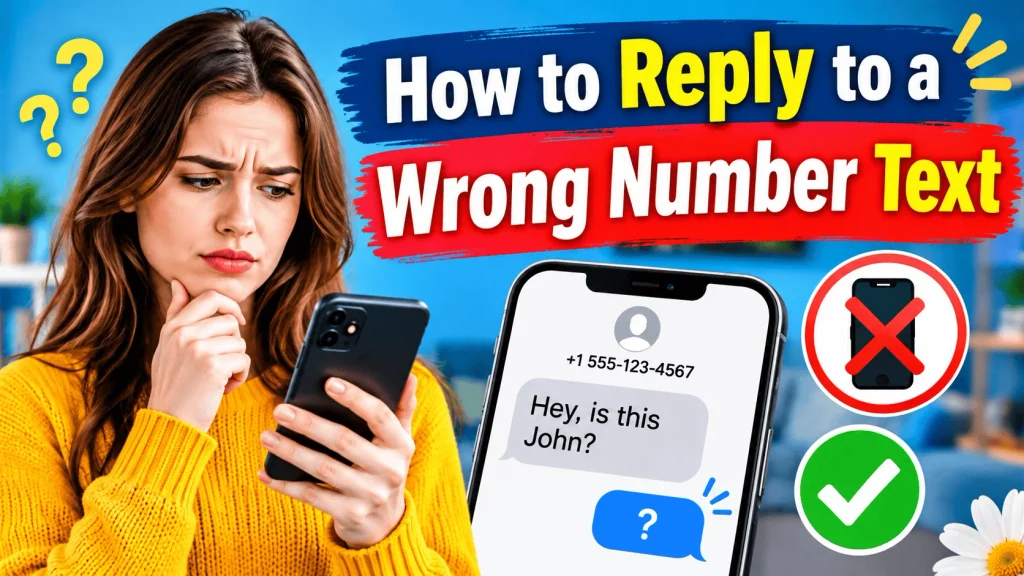
Receiving a message intended for someone else can feel awkward, but a short, polite reply can clear up the confusion. The best response depends on who is contacting you and how formal the situation is.
Here are some ready-to-use replies for different situations:
- Simple: “Sorry, I think you have the wrong number.”
- Polite: “Hi! I believe this message was meant for someone else.”
- Friendly: “Oops, I think you meant to text someone else!”
- Professional: “Hello, I believe you may have contacted the wrong person.”
- Firm: “You have reached the wrong number. Please check the contact details.”
- Repeated messages: “I’m sorry, but you have the wrong number. Please update your contact list.”
For most unfamiliar messages, a brief response is enough. If someone continues contacting you after you have explained the mistake, you do not need to keep replying.
Wrong Number Text Examples for Everyday Situations
The right wording depends on the situation. A casual message to a stranger does not require the same response as a business call. Choosing an expression that fits the context helps you sound natural and avoid unnecessary confusion.
When a Stranger Sends You a Message
If someone asks about plans or an appointment you know nothing about, explain the mistake politely.
Example:
Sender: “Are we still meeting at 6 p.m.?”
Reply: “Hi! I think you may have the wrong number. I’m not the person you’re trying to reach.”
When Someone Calls Looking for Another Person
A caller may have saved an incorrect number or accidentally dialed the wrong digits. A calm response can resolve the misunderstanding.
Example:
Caller: “Could I speak to Sarah, please?”
Reply: “I’m sorry, but there’s no Sarah here. You may have the wrong number.”
When a Business Contact Reaches You by Mistake
Professional communication requires clear and courteous wording. Avoid overly casual expressions when speaking with an unfamiliar business contact.
Example:
Caller: “Hello, I’m calling to discuss tomorrow’s appointment.”
Reply: “Hello, I believe you may have reached the wrong person. Could you please double-check the contact number?”
When Someone Repeatedly Contacts You
If you have already explained the mistake, a firmer response may be appropriate.
Example:
Sender: “I need to speak to Alex. Why aren’t you answering?”
Reply: “I’ve explained that this is the wrong number. Please check the number and update your contact details.”
Helpful tip: You can correct a mistake without sharing personal information. If a stranger asks for your address, verification code, or other private details, you do not need to provide them.
Professional Ways to Handle a Wrong Number Call
Professional communication requires a polite but clear response when someone contacts the wrong person or department. Instead of giving a blunt correction, use wording that helps the caller understand the mistake while keeping the conversation respectful.
Here are a few examples suitable for workplace and business calls:
When a Caller Asks for the Wrong Employee
“I’m sorry, but this is not the correct contact for that employee. You may need to check their direct number.”
When Someone Reaches the Wrong Department
“Thank you for calling. I believe you’ve reached the wrong department. Let me help you find the appropriate contact.”
When a Business Contact Has Outdated Details
“It appears the contact information you have may be outdated. Could you please verify the number before calling again?”
A professional response should remain calm, helpful, and focused on resolving the misunderstanding. Avoid sharing confidential details or making the caller feel uncomfortable about an honest mistake.
How to Choose the Right Wrong Number Expression
Not every situation calls for the same response. Some expressions are short and casual, while others are better suited to professional or sensitive conversations. Use this guide to choose wording that matches your situation.
| Situation | Recommended Expression | Tone |
| Casual text message | “Sorry, wrong number!” | Informal |
| Unknown caller | “I think you have the wrong number.” | Neutral |
| Professional phone call | “I believe you may have reached the wrong number.” | Formal and polite |
| Mistaken text | “I think this message was meant for someone else.” | Friendly |
| Incorrect business contact | “You may have the wrong contact details.” | Professional |
| Repeated unwanted messages | “Please check the number and update your contacts.” | Firm |
| Unclear situation | “Could you please confirm whom you’re trying to reach?” | Courteous |
When communicating with someone you do not know, begin with a neutral or polite expression. If the misunderstanding continues, you can become more direct without being rude.
When Should You Use “You Have the Wrong Number”?
“You have the wrong number” is most useful when you need to quickly tell a caller or texter that they have contacted someone other than their intended recipient.
Professional settings
The phrase can be used at work, especially when the situation is straightforward.
I’m sorry, you have the wrong number. Our office does not handle property registrations.
For customer-facing communication, a slightly softer version such as “I believe you’ve reached the wrong number” can sound more courteous.
Casual conversations
The original phrase is completely natural among friends, family members, and strangers who accidentally contact you.
Sorry, you have the wrong number. There’s no Daniel here.
Writing, presentations, and digital communication
The expression is more common in dialogue and direct communication than in formal writing. In an article or report, writers might use “incorrect contact information” or “the caller reached the wrong number” instead.
In WhatsApp, SMS, or other messaging platforms, shorter versions are often more natural:
Sorry, wrong number.
When it is especially effective
Use the phrase when:
- You want to correct the caller immediately.
- The mistake is obvious.
- You do not need to explain anything further.
- You want a familiar, easy-to-understand response.
- You are speaking casually or neutrally.
When Should You Avoid “You Have the Wrong Number”?
Overly formal situations
In a formal customer-service environment, simply saying “You have the wrong number” may sound abrupt. A more polished option is:
I’m sorry, but I believe you’ve reached the wrong department.
Legal, academic, or sensitive contexts
If the communication involves confidential information, avoid giving unnecessary details to an unknown caller. A neutral response such as “I’m unable to assist with that request” may be safer and more appropriate than explaining who does or does not use the number.
Situations where nuance may be lost
Sometimes the problem is not actually a wrong number. The caller may have reached the correct organization but the wrong department, employee, or extension.
For example:
I think you’ve reached the wrong department.
is more accurate than:
You have the wrong number.
when the telephone number itself is correct.
“You Have the Wrong Number” vs Similar Expressions (Key Differences)
These expressions overlap, but each emphasizes a slightly different problem.
| Phrase | Meaning Difference | Tone Difference | Best Use Scenario |
| You have the wrong number | The person contacted an incorrect phone number | Direct and neutral | Everyday calls and texts |
| You have reached the wrong number | The contact has arrived at an unintended number | Polite and neutral | Professional or customer communication |
| I believe you have the wrong number | Politely suggests that a numbering mistake occurred | Softer and cautious | Workplace calls and formal conversations |
| You’ve reached the wrong person | The number may be correct, but the recipient is not the intended person | Neutral and conversational | Calls and messages |
| You’ve reached the wrong department | The organization is correct, but the department is not | Professional and helpful | Business and customer service |
| You may have dialed the wrong number | Suggests that the caller entered the number incorrectly | Polite and non-confrontational | Customer service and unfamiliar callers |
Meaning differences
“You have the wrong number” focuses directly on the incorrect telephone number.
“You have reached the wrong number” describes the result rather than placing direct emphasis on the caller’s mistake.
“I believe you have the wrong number” softens the correction by using “I believe.”
“You’ve reached the wrong person” is broader and works when the number may belong to the correct account or organization but the intended individual is unavailable or different.
“You’ve reached the wrong department” is especially useful in businesses where multiple teams share one organization.
“You may have dialed the wrong number” politely suggests a possible dialing error without stating it as an accusation.
Are You Ready to Test Your English?
Challenge yourself with 5 quick questions about wrong-number expressions and discover how well you know everyday English.
Common Mistakes & Misuse of “You Have the Wrong Number”
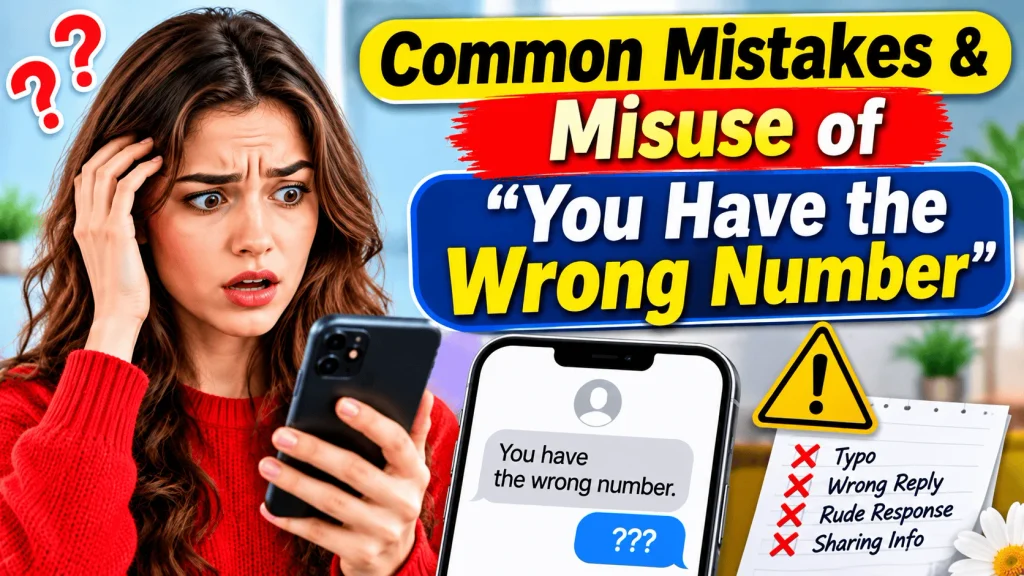
Overuse
If every accidental contact receives the same scripted response, communication can feel robotic. A little variation can make replies more natural.
Instead of repeatedly writing:
You have the wrong number.
You can use:
Sorry, I think you’ve reached the wrong person.
Incorrect context
Do not say “wrong number” when the actual issue is that someone has contacted the wrong department or employee.
Contradictory usage
Avoid saying:
You have the wrong number, but this is the company you were trying to reach.
If the caller reached the correct company but the wrong department, explain that distinction instead.
Cultural misunderstandings
Some ESL learners may interpret the phrase as an accusation. In English, it is usually just a factual correction. Adding “sorry,” “I think,” or “I believe” can make the interaction feel friendlier.
| Avoid this | Use this instead |
| You are wrong number. | You have the wrong number. |
| You reached wrong person. | You’ve reached the wrong person. |
| I am not your number. | I think you’ve contacted the wrong person. |
Meaning, Usage & Examples for Each Alternative
You Have Reached the Wrong Number
This expression politely explains that someone has contacted a telephone number that does not connect them with their intended recipient. It is especially useful in customer service, reception areas, and professional conversations because it corrects the mistake without sounding accusatory.
Example: “If you were trying to reach our billing team, you’ve reached the wrong number. Let me provide their direct contact.”
I Believe You Have the Wrong Number
Adding “I believe” makes the correction sound less direct and more considerate. This expression works well when speaking with unfamiliar callers or handling professional conversations where a courteous tone matters.
Example: “I believe you have the wrong number for the delivery office. The correct contact details are available on our website.”
You May Have Dialed the Wrong Number
This phrase gently suggests that the caller might have entered an incorrect telephone number. Rather than directly pointing out the mistake, it focuses on what may have caused the confusion.
Example: “You may have dialed the wrong number. This line belongs to the maintenance office, not the leasing team.”
This Is Not the Number You Were Trying to Reach
When someone contacts you expecting to speak with another person or service, this expression clearly explains that they have reached an unintended contact. Its straightforward wording makes it useful for formal conversations and customer support.
Example: “This is not the number you were trying to reach. The admissions office has a separate line for application questions.”
You’ve Reached the Wrong Person
Sometimes the issue is not the telephone number itself but the person who answers. This expression is more suitable when someone asks for a specific individual and you are not that person. It works naturally in phone calls, text messages, and everyday conversations.
Example: “Sorry, you’ve reached the wrong person. I’m not involved with the event, but I hope you find the right organizer.”
I’m Sorry, I Think You Have the Wrong Number
Combining an apology with “I think” makes this response warm and considerate. It is a useful choice when you want to correct an unfamiliar caller or sender without making the interaction uncomfortable.
Example: “I’m sorry, I think you have the wrong number. There’s no one here by that name.”
Conclusion
Knowing different ways to say “you have the wrong number” helps you communicate clearly while choosing words that suit the situation. This expression is simple, direct, and commonly understood in both American and British English. It works well for everyday calls and messages, but a softer alternative may be more appropriate when speaking with unfamiliar callers or business contacts.
Phrases such as “I believe you have the wrong number,” “You have reached the wrong number,” and “You may have dialed the wrong number” offer polite ways to correct a misunderstanding. If someone is looking for a different individual, “You’ve reached the wrong person” is more precise, while “Sorry, wrong number” is ideal for casual texts. Choosing the right expression helps you respond naturally, avoid sounding abrupt, and keep communication clear and respectful.
FAQs
What does “you have the wrong number” mean?
“You have the wrong number” means that someone has called or messaged a telephone number that does not belong to the person they intended to contact. It is commonly used when someone dials incorrectly, has outdated contact information, or confuses one contact with another. The phrase is straightforward, neutral, and widely understood.
What is a polite way to say “you have the wrong number”?
A polite alternative is “I’m sorry, I think you have the wrong number.” You can also say, “I believe you’ve reached the wrong number.” Adding expressions such as “I think,” “I believe,” or “I’m sorry” softens the correction and makes it more suitable for professional calls, unfamiliar callers, and customer-service situations.
Is “you have the wrong number” rude?
No, the phrase is not inherently rude. It is a normal and factual way to explain that someone contacted the wrong number. However, its directness can sound abrupt depending on how it is delivered. For a warmer response, say “Sorry, I think you have the wrong number” or “I believe you’ve reached the wrong number.”
What is another way to say “you have the wrong number”?
Useful alternatives include “You have reached the wrong number,” “I believe you have the wrong number,” “You may have dialed the wrong number,” and “I think you’ve got the wrong contact.” For casual texting, “Sorry, wrong number” is especially natural. Choose an alternative based on whether you need a professional, polite, or casual tone.
What is the difference between “wrong number” and “wrong person”?
“Wrong number” specifically indicates that the telephone number contacted was incorrect for the intended recipient. “Wrong person” means the caller may have reached a valid number but contacted someone other than the person they wanted. For example, if someone asks for Sarah and you are not Sarah, “You’ve reached the wrong person” is more precise.
How do you politely tell someone they texted the wrong number?
You can simply write, “Sorry, I think you have the wrong number.” For a casual conversation, “Sorry, wrong number” is perfectly natural. If you want to be helpful, say, “I think you’ve reached the wrong contact. You may want to double-check the number.” Avoid providing unnecessary personal information to an unknown sender.
What is a professional way to say “wrong number”?
Professional options include “I believe you’ve reached the wrong number,” “You may have dialed the wrong number,” and “I believe you have the incorrect number.” If someone has contacted the correct organization but the wrong team, “You’ve reached the wrong department” is more accurate and helpful than simply saying “wrong number.”
Is “you have the wrong number” used in British and American English?
Yes. “You have the wrong number” is common in both British and American English and has essentially the same meaning in each variety. There is no significant regional difference in its basic use. Individual speakers may prefer softer or more formal alternatives depending on the situation, audience, and communication style.
Can “you have the wrong number” be used in formal writing?
It can be understood in formal writing, but it is generally more natural in conversations, phone calls, and messages. In formal documents or emails, alternatives such as “The telephone number provided is incorrect” or “The contact number appears to be outdated” may be more precise and professional.
What should you say when someone calls the wrong number?
For an ordinary accidental call, “Sorry, I think you have the wrong number” is a clear and polite response. If you want to be brief, “Sorry, wrong number” works well. In a workplace, you can explain that they have reached the wrong department or direct them to the appropriate contact if you know it.